

The best person for your open role is probably employed right now, doing a good job somewhere else, and not reading job postings. That’s a problem if you’re used to posting jobs and waiting for applicants.
It’s also an opportunity. Most of your competitors are still playing the same game, posting jobs and hoping. If you can learn how to reach the people who aren’t looking, you can hire people your competitors will never see.
Here’s how it actually works.
Accept that your job posting isn’t going to reach them
The first mental shift is accepting this. The person you actually want to hire is not browsing LinkedIn job alerts. They’re not on Indeed. They’re not setting up Handshake profiles. They’re busy at their current job.
This means the entire “write a great posting and run ads” playbook doesn’t apply. You’re not trying to attract applicants. You’re trying to find specific people and start a conversation with them. It’s the core reason companies end up hiring a headhunter in the first place.
Completely different work.
Start with a specific profile, not a job description
When you’re recruiting passive candidates, “3-5 years of experience in enterprise sales” is useless. That describes 40,000 people. You need a specific profile of the person you’re looking for.
The best way to build that profile: think about the last person who did this job well. What did their background look like? Where had they worked before? What industries were they in? What kind of sales did they do? How did they come up? What was their trajectory?
That gives you a profile that’s hireable. Now you can go find the 30 people in your region who match.
Do real research, not keyword searches
LinkedIn’s search is a blunt tool. Typing “Sales Manager” into the search bar gives you thousands of people with that title, most of whom aren’t what you’re looking for.
Real sourcing looks different. You’re looking at company pages to figure out who’s at competitors. You’re looking at LinkedIn posts and comments to figure out who’s active and respected. You’re looking at conference speaker lists, alumni groups, industry associations. You’re building a real list of specific people you want to talk to.
This takes time. It’s also how you find the 10 people actually worth reaching out to instead of the 500 who happen to match a keyword.
Reach out like a human
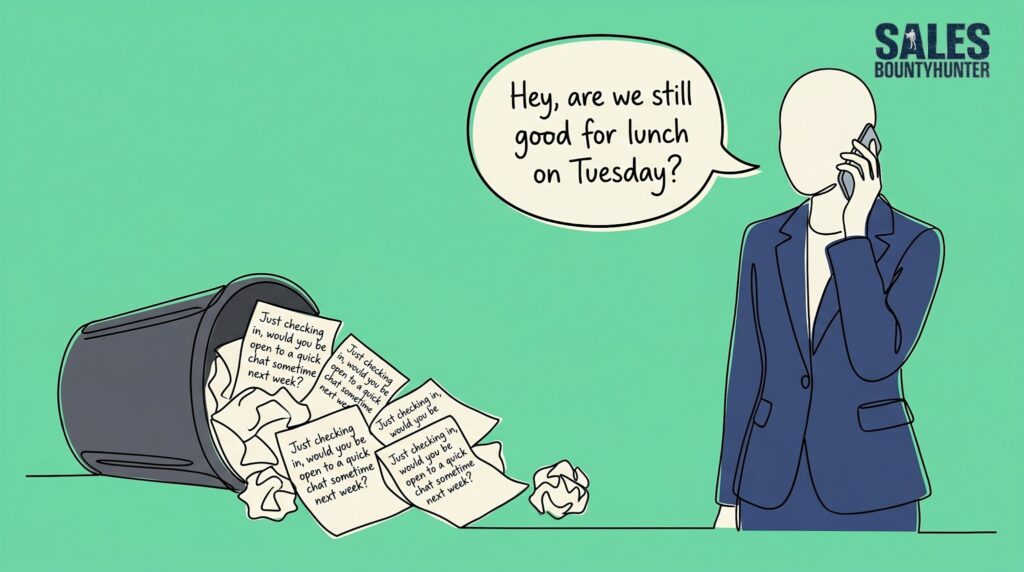
When you do reach out, the message matters enormously. The default is to send a generic recruiter pitch: “I’m working on an exciting opportunity…” That goes straight to the trash.
The messages that get replies are specific and personal. They reference something about the person’s actual work. They explain why you’re reaching out to them specifically, not just anyone. They’re short. They don’t demand a resume. They ask a simple question: “Would you be open to a 15-minute conversation about a role that might be worth knowing about?”
If your outreach message could be sent to 500 people with names swapped out, it’s not going to work.

The first conversation is a conversation
When someone does respond, the first conversation isn’t an interview. It’s two professionals talking. You’re trying to understand where they are in their career, what they actually care about, what their current situation looks like. Candidates often tell us their side feels very different from the recruiter’s side, which is why we wrote what working with a recruiter is actually like.
You’re also telling them about the role, but not a sales way. The real question on their mind: why should I even consider leaving a good job for this? You have to answer that, honestly. If the answer is weak, they’ll know, and they’ll pass.
Good candidates will often say no to the specific role but leave the door open for future conversations. That’s valuable. A good passive-candidate search is a relationship game across years, not a transaction this month.
Move faster than they expected
Passive candidates are cautious. They’re trading a known good situation for an unknown. Any friction in your process, any slow response, any unclear next step, they’ll take it as a sign that this isn’t worth the risk.
If you want to close a passive candidate, your process has to feel exceptionally well-run. Fast replies. Clear timelines. Organized interviews. A real pitch from the hiring manager about why this role is interesting. A competitive offer that they don’t have to negotiate for three weeks. This all starts with actually knowing what to ask in the room. These 10 sales interview questions are a decent starting point.
If your process feels disorganized, you’ll lose them and they’ll never tell you why.
Expect a low hit rate
Most firms that try passive recruiting for the first time get discouraged. You reach out to 50 people. Ten respond. Three are interested enough to talk. One becomes a real candidate. That feels terrible compared to posting a job and getting 200 applicants.
But one real candidate from passive outreach is usually worth more than 200 applicants from a post. The passive candidate actually has the right background. They’re considering the role because the timing and pitch worked, not because they’re applying to anything with a pulse.
Volume is low. Quality is high.
When to do it yourself and when to get help
Passive recruiting works, but it’s time-consuming. Most hiring managers can’t spend 10 hours a week on sourcing and outreach. That’s why firms like ours exist: to do that work for companies that don’t have the bandwidth, across sales and legal roles.
If you have a role where posting hasn’t worked and you’ve got a specific profile in mind, this is the kind of search we do all day. We’d be happy to talk through whether it’s worth running that kind of search for your role or whether there’s a simpler approach.